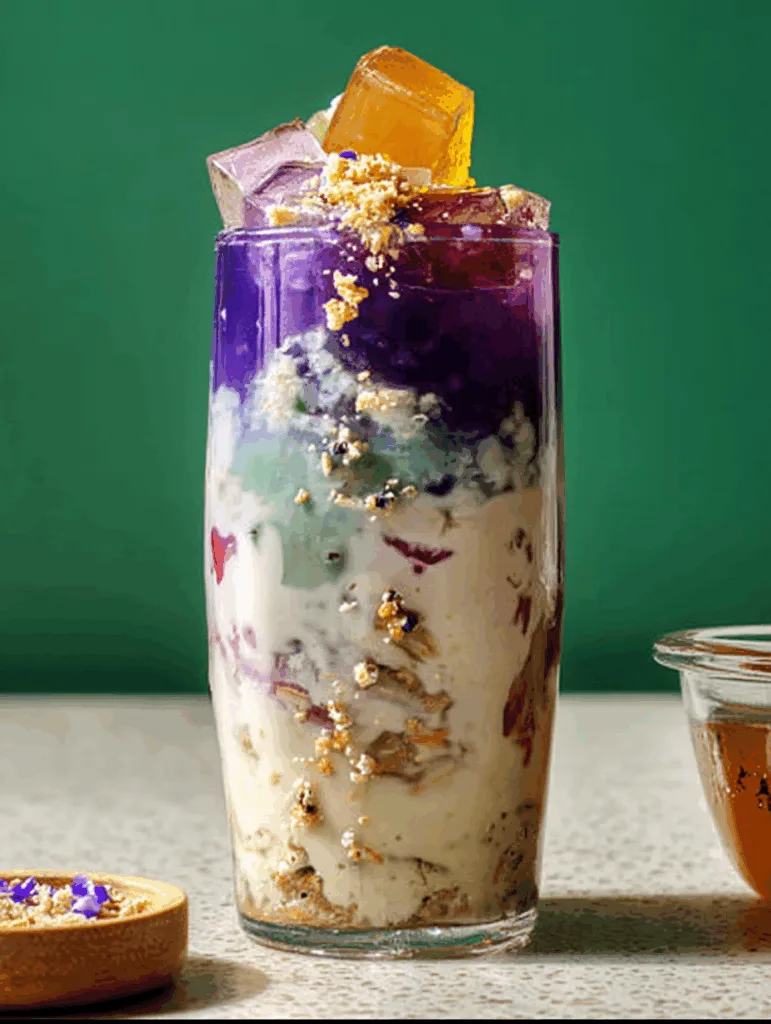
Colorful, cold, and irresistibly layered, halo halo is the dessert that captures the heart of Filipino summers. In this guide, we’ll walk you through everything to know from its roots to the perfect homemade recipe.
What Makes Halo Halo So Special?
A Taste of the Philippines in Every Spoonful
There’s nothing quite like digging your spoon into a tall glass of halo halo. Every bite feels like a surprise soft, chewy beans, icy crunch, and creamy sweetness all blended together. This beloved Filipino dessert is more than just a refreshing treat. It’s a cultural icon served during summer gatherings, birthdays, and backyard merienda.
The name halo halo literally translates to “mix mix” in Tagalog, and that’s exactly how you enjoy it. Its Japanese influence can be traced back to kakigori (shaved ice with syrup), but Filipinos took it to another level by layering local ingredients like red mung beans, sweet chickpeas, coconut jelly, and ube halaya.
Today, it stands tall both figuratively and literally as one of the most iconic Filipino desserts. Think of it as a delicious symbol of the country’s love for flavor fusion and festive textures. Similar Asian-inspired cold treats, like the Japanese pink salt and ice, share this refreshing, layered appeal, but halo halo brings its own unique tropical twist.
The Iconic Layers That Define It
What really makes halo halo stand out is the diversity of textures and flavors. You start with a base of shaved ice, light and snowy, followed by layers of sweetened red mung beans and chickpeas. Next come the bright and bouncy jellies nata de coco and kaong that add a playful chew.
Then, there’s the heart of it all: ube halaya. This vibrant purple yam paste adds richness and color, perfectly balanced by creamy scoops of ube ice cream and soft, custard-like coconut pudding. Finally, everything is brought together with a pour of chilled evaporated milk.
Some even like to finish it off with toasted coconut flakes for a nutty crunch. It’s a mix of tropical, creamy, chewy, and icy a celebration in every glass.
Recipe
Print
Halo Halo
- Total Time: 15 mins
- Yield: 2 serving(s) 1x
- Diet: Vegetarian
Description
This halo halo recipe delivers a refreshing and colorful Filipino dessert with sweet beans, coconut jellies, shaved ice, and creamy ube ice cream—all beautifully layered for a vibrant summer treat.
Ingredients
- 1 1/2 cups shaved ice (360 g)
- 1/2 cup sweet chickpeas (120 g)
- 1/2 cup sweet red mung beans (120 g)
- 1/3 cup nata de coco (coconut gel in syrup) (80 g)
- 1/4 cup kaong (sugar palm fruit in light syrup) (60 g)
- 1 Tbsp. ube halaya (sweet purple yam paste) (20 g)
- 2 large or 2 small scoops ube ice cream
- 2 (2″) cubes coconut pudding or flan
- 1/2 cup evaporated milk (120 ml)
- Coconut flakes, for serving (optional)
Instructions
- In 2 serving bowls or tall, large glasses, cover bottoms with shaved ice.
- Top ice with chickpeas, mung beans, nata de coco, kaong, and ube halaya.
- Top with ube ice cream and coconut pudding, then pour milk over.
- Sprinkle with coconut flakes, if using.
Notes
- Use finely shaved ice for best texture.
- Layer ingredients by density for a more aesthetic presentation.
- Chill all components before assembling for extra refreshment.
- Prep Time: 10 mins
- Cook Time: 0 mins
- Category: Dessert
- Method: Layered
- Cuisine: Filipino
Nutrition
- Serving Size: 1 glass
- Calories: 340
- Sugar: 28g
- Sodium: 90mg
- Fat: 12g
- Saturated Fat: 7g
- Unsaturated Fat: 4g
- Trans Fat: 0g
- Carbohydrates: 48g
- Fiber: 4g
- Protein: 6g
- Cholesterol: 15mg
How to Assemble an Aesthetic Halo Halo at Home
Choosing Your Base and Layers
The beauty of halo halo begins with the base. Shaved ice is the first step go for finely shaved ice rather than crushed or chunky types. You want snow-like texture, not crunch. A blender with an ice shave mode or a manual ice shaver works well for home setups.
For the layering ingredients, start with the heavier and denser options. Sweet red mung beans and sweetened chickpeas are the best foundations because they settle naturally at the bottom. Their mild earthy taste balances the sweeter jellies above them.
Next comes the color! Add nata de coco (coconut gel) and kaong (sugar palm fruit) from jars. If using store-bought versions, drain excess syrup first so the dessert doesn’t get overly sweet. These bring a pop of texture and a soft chew that contrasts the ice perfectly.
Then there’s the beloved ube halaya, the rich purple yam paste. You only need a spoonful to bring that nutty, earthy sweetness. Ube halaya can be found in many Asian stores or made at home from mashed purple yam, coconut milk, and sweetener.
For a soft, creamy contrast, cut cubes of coconut pudding or custard and place them gently on top. The final creamy pour of chilled evaporated milk will start melting the ice just enough to blend everything into harmony.
Visuals Matter: Building It Like a Filipino Pro
The secret to an eye-catching halo halo is all in the layering and assembly. Whether you’re using a classic bowl or a tall clear glass, build it with intention.
Start with your shaved ice press it gently into the bottom of your glass. Then layer your beans, followed by jellies, all stacked to create contrasting color blocks. Use a spoon to keep edges clean while building. Avoid mixing too soon halo halo gets its charm from you mixing just before eating.
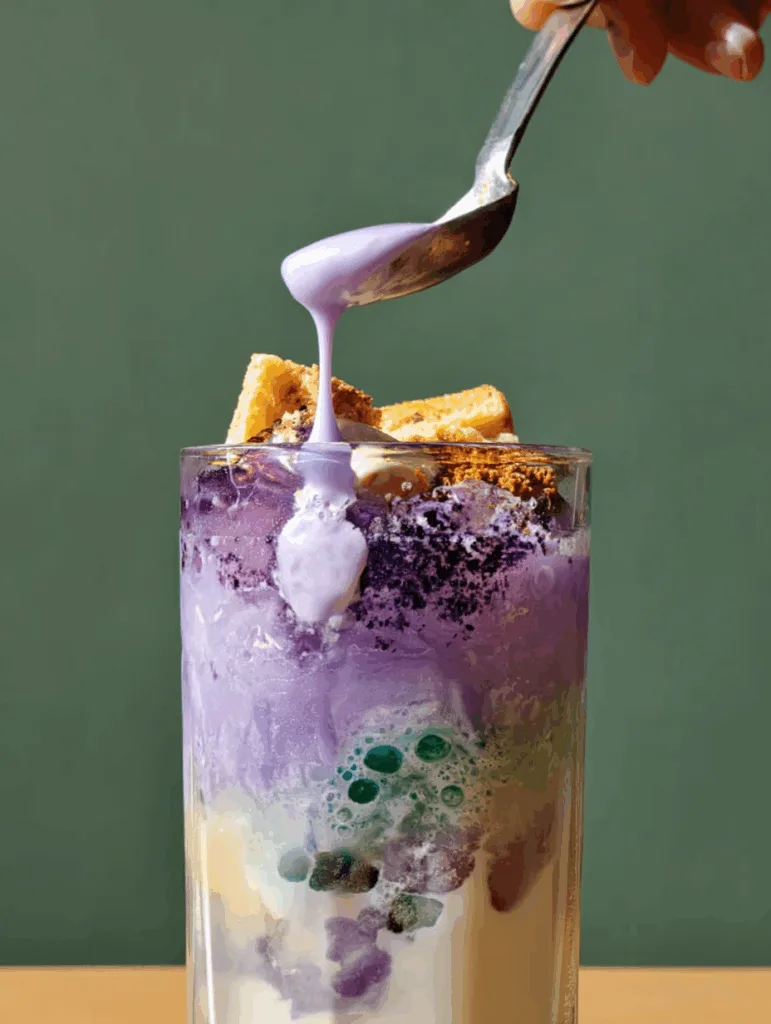
Spoon the ube halaya slightly off-center for an artistic touch, then add a generous scoop of ube ice cream right on top. The deep purple color not only draws the eye but instantly signals authentic flavor.
Gently place coconut pudding cubes and finish by pouring evaporated milk slowly over the top, letting it drip through the layers like a waterfall of cream. If you want a little flair, sprinkle coconut flakes across the surface it’s optional, but adds a hint of texture and visual appeal.
These thoughtful layers are what make halo halo not just tasty but aesthetic and Instagram-worthy, similar to the colorful buildup in our Strawberry sago recipe. When done right, it’s a dessert and a showstopper all in one.
Customizing Your Halo Halo
Ingredient Swaps & Flavor Boosters
The magic of halo halo is that there’s no single “right” way to make it. Every family, region, and street vendor has their own twist and now, you can too.
Want to experiment with different layers? Swap the sweet chickpeas for thin slices of jackfruit for a fruity tropical bite. Or, if you like a crunchier texture, sprinkle in some puffed rice or rice flakes between the layers. They’ll absorb just enough milk to soften slightly while still adding a lovely contrast to the jellies and beans.
Prefer something creamier? Replace evaporated milk with light coconut milk or even oat milk. It adds a subtle nuttiness while staying refreshingly smooth. For extra sweetness, a drizzle of brown sugar syrup or honey over the ice before layering the rest will infuse the entire dish with a warm caramel touch.
Toppings are also fair game. Instead of coconut flakes, try crushed graham crackers, freeze-dried fruits, or even crumbled cookies. Just a pinch goes a long way in upgrading the visual and flavor profile without overpowering the original mix.
Love drinkable desserts? Let your creativity flow like in this chilled ninja slushie strawberry milkshake blend halo halo into a thick shake with crushed ice and milk for a frozen fusion treat.
This flexibility is why halo halo is more than a dessert. It’s a canvas of flavor.
Making It Allergen-Friendly
If you’re serving to guests with dietary needs, it’s simple to make halo halo inclusive without losing its charm.
For dairy sensitivities, swap out evaporated milk for coconut, almond, or oat milk. Ube ice cream is often dairy-based, but non-dairy versions made from coconut or cashew milk are widely available in specialty stores.
For egg-free needs, choose coconut pudding over traditional custards. It’s soft, silky, and adds the same richness without relying on animal products.
Avoiding gluten? Most ingredients in halo halo are naturally gluten-free, but be mindful of processed jellies or flavored add-ins. Always check labels for hidden binders or wheat-based sweeteners.
Nut allergies? Stick with basic toppings like coconut flakes, toasted oats, or rice crisps. Avoid nut-based garnishes or cross-contaminated toppings from mixed dessert jars.
This adaptability makes halo halo perfect for family gatherings, potlucks, or even school events everyone can enjoy a colorful, ice-cold glass, no matter their preferences.
And with all these mix-ins and substitutes, you can keep the essence of halo halo while tailoring it to every table, every season, and every taste.
Halo Halo in Filipino Culture & Beyond
A Dessert With Deep Roots and Modern Flair
Halo halo isn’t just a dessert it’s a summer tradition, a symbol of hospitality, and a celebration in a glass. In the Philippines, it’s sold by street vendors in colorful carts, served in beach resorts, and often brought out during family reunions or Sunday gatherings. The clinking of ice, the layering of vibrant ingredients, and the final mix with a long spoon is a memory shared across generations.
This dessert has humble beginnings, rooted in the adaptation of Japanese kakigori (shaved ice). Over time, Filipinos gave it local color adding sweetened native beans, tropical fruits, and that unforgettable ube. It’s a blend of cultures, just like the islands themselves.
And yet, halo halo continues to evolve. Filipino-American cafes have brought it stateside with a twist swapping ingredients, styling it in modern glassware, and even topping it with edible gold or popping boba. It’s not uncommon to find versions of halo halo that look just as much at home on a magazine cover as they do in a street-side eatery.
This refreshing dessert is now showing up in food festivals and summer menus across the U.S., standing alongside globally-inspired creations like the dreamy matcha tea tiramisu proof that bold, beautiful Asian desserts are having a major moment.
Halo halo is no longer just about nostalgia it’s also about innovation.
Where to Find the Best Halo Halo (Outside the Philippines)
While nothing beats a homemade version, there are plenty of spots where you can try halo halo if you’re outside the Philippines. Filipino restaurants like Jollibee, Max’s, and independent dessert cafés in cities like Los Angeles, New York, and Chicago are now offering their own takes.
Asian grocery stores often carry jars of the essentials red mung beans, chickpeas, nata de coco, kaong, and even ready-made ube halaya. Some even offer halo halo kits so you can assemble one right at home. It’s convenient, especially for busy families who want a taste of home without starting from scratch.
But truthfully, making halo halo at home is worth every chilled spoonful. It lets you control the flavors, adjust to preferences, and make each layer count. Plus, it’s a fun way to introduce friends to Filipino culture especially when they get to stir the whole thing together and watch it transform before their eyes.
Whether you’re enjoying it from a street vendor in Manila or serving it up at a summer party in your backyard, halo halo remains a true testament to flavor, tradition, and joy.
Final Thoughts
Halo halo isn’t just a dessert it’s a celebration of contrasts. Cold and creamy, chewy and crunchy, bright and mellow, every spoonful brings a burst of flavor and nostalgia. From its roots in Filipino culture to its reinvention across the world, it continues to win hearts with color and charm.
Now that you know how to make it from scratch, customize it to your taste, and appreciate its place in culinary tradition, all that’s left is to tuck in and enjoy the mix.