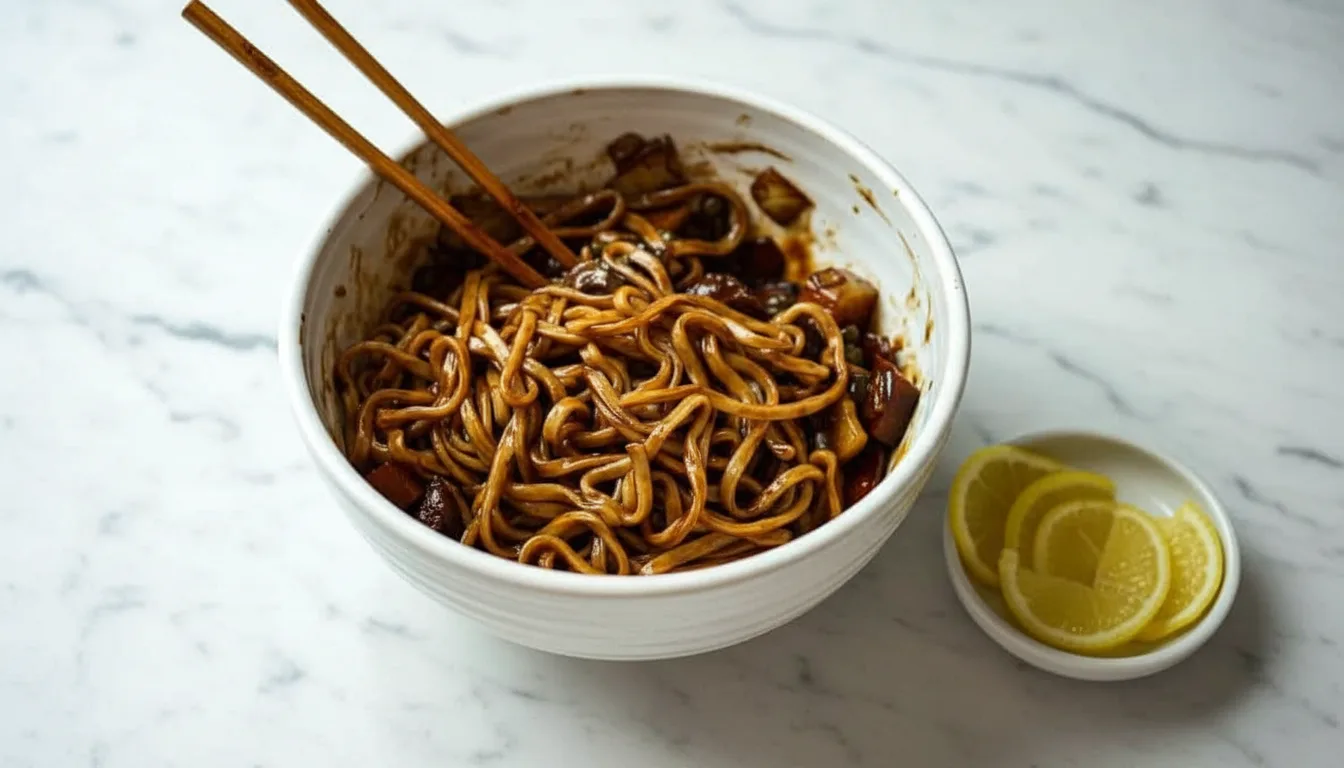
Welcome to your new favorite weeknight meal! Korean black bean noodles, known as Jjajangmyeon, deliver bold umami flavors in every bite.
This comforting dish features chunky vegetables coated in a rich black bean sauce served over springy noodles. With our simplified cooking method, you’ll have dinner ready faster than ordering delivery.
First, we’ll explore why this plant-based version wins over meat-eaters and vegetarians alike. Next, you’ll get step-by-step guidance through steaming woks and aromatic spices.
I’ve also included clever ingredient swaps for varying dietary needs and pro tips for perfect sauce consistency. Get ready to transform simple ingredients into an authentic-tasting Korean classic!
Why You’ll Love This Korean Black Bean Stir-Fry
Three irresistible factors make this noodle dish a regular on our meal rotation. First, the savory-sweet sauce beautifully coats every vegetable and noodle strand.
Unlike overpowering gravies, this black bean blend offers balanced depth without heaviness. Second, it delivers restaurant-quality taste using common pantry staples.
The complex flavor comes from jjajang paste – a fermented soybean mixture that creates magical umami.
Third, this recipe proves satisfying meals don’t require hours in the kitchen. Our version maintains traditional textures while cutting prep time.
From slicing vegetables to serving, you’ll spend just 30 active minutes. Additionally, these Korean noodles lend themselves to creative variations.
Try different seasonal veggies or adjust spice levels to your preference. For another inspiring weeknight option, explore our spring meals collection featuring light, veggie-packed dinners.
Recipe
Print
Korean Black Bean Noodles (Jjajangmyeon) Recipe
- Total Time: 30 minutes
- Yield: 4 servings 1x
Description
Tasty Korean-style noodles with rich black bean sauce and vegetables
Ingredients
- 2 tbsp vegetable oil (30 ml)
- 3/4 cup vegan steak (90 g)
- 1/2 cup onion, chopped (75 g)
- 3 cloves garlic, minced (15 g)
- 1/3 cup jjajang paste (80 g)
- 1/2 cup zucchini, chopped (65 g)
- 1 yellow potato, diced (150 g)
- 1/2 tsp sea salt (3 g)
- 1 cup cabbage, chopped (70 g)
- 1/2 tsp black pepper (1 g)
- 1 tbsp soup soy sauce (15 ml)
- 3 tbsp brown rice syrup (45 ml)
- 2 cups vegetable broth (480 ml)
- 1/2 cup peas, frozen (75 g)
- 1 tbsp potato starch (8 g)
- 12 oz noodles, cooked (340 g)
Instructions
- Add 1 tablespoon of oil to a large wok over medium-high heat.
- When oil shimmers (about 1 minute), add vegan steak. Cook 2-3 minutes until browned. Remove and drain on paper towel.
- In same pan, sauté onions and garlic until onions begin to brown (about 3 minutes).
- Create well in center of wok and add remaining 1 tablespoon oil. When shimmering, add jjajang paste.
- Sauté paste in oil until glossy (about 30 seconds).
- Add zucchini, potato, and cabbage. Sauté 2 minutes until zucchini softens.
- Season with salt and pepper. Stir vegetables into paste until coated.
- Deglaze pan with soy sauce and add rice syrup. Stir until vegetables are glossy.
- Pour in vegetable broth and bring to boil. Reduce heat to low and simmer 15 minutes until potatoes soften.
- Whisk potato starch with 1/4 cup water to make slurry.
- Add peas, reserved vegan steak, and potato starch slurry to sauce.
- Stir continuously over low heat until sauce thickens to gravy consistency.
- Divide cooked noodles among bowls and top with sauce.
- Serve immediately with optional kimchi and pickled vegetables.
Notes
- For oil-free version, substitute vegetable broth when cooking vegan steak and sautéing paste
- Cut vegetables uniformly for even cooking
- Use fresh noodles for best texture – cook right before serving
- Leftover sauce stores separately from noodles for better meal prep
- Prep Time: 5 min
- Cook Time: 25 min
- Category: Main Course
- Method: Baked
- Cuisine: American
Nutrition
- Calories: 606 kcal
- Sugar: 18 g
- Sodium: 1429 mg
- Fat: 13 g
- Carbohydrates: 103 g
- Fiber: 7 g
- Protein: 28 g
Ingredients and Substitutions
Base Components
These core ingredients build the dish’s signature taste and texture:
- Jjajang paste (fermented black soybean paste)
- Vegetable protein chunks or diced mushrooms
- Onion, garlic, zucchini, potato, and cabbage
Sauce Enhancers
These elements create the perfect sweet-salty balance:
- Brown rice syrup or maple syrup
- Soup soy sauce or tamari for gluten-free
- Vegetable broth (low-sodium if preferred)
Noodle Options
While thick wheat noodles are traditional, consider these alternatives:
- Sweet potato starch noodles for chewier texture
- Zucchini noodles or spaghetti squash for low-carb
- Rice noodles as a gluten-free alternative
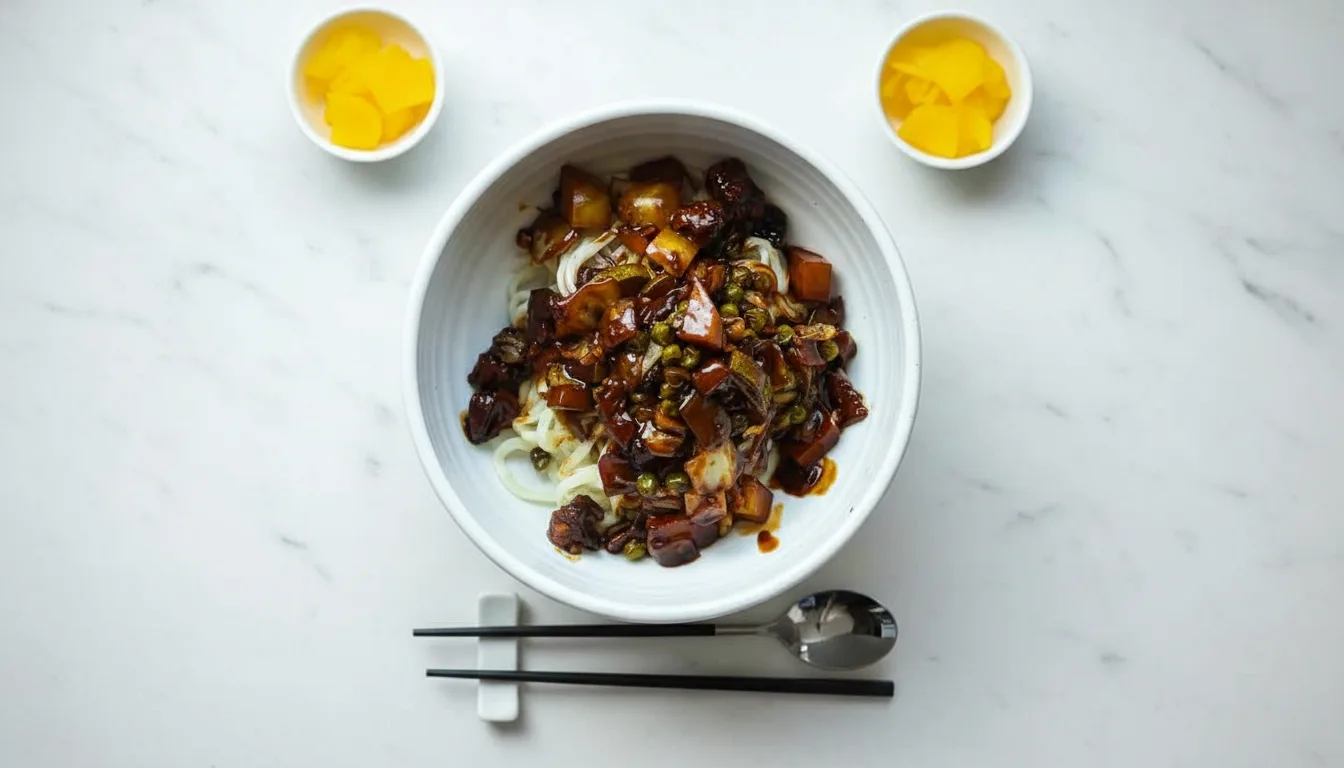
How to Make Korean Noodles With Black Bean Sauce
Step 1: Prepare Components
First, chop all vegetables into uniform bite-sized pieces.
This ensures even cooking. Keep potatoes submerged in water
until use to prevent browning. Cook noodles according
to package directions, then drain and rinse.
Step 2: Build Flavor Layers
Heat oil in a wok over medium-high.
Cook plant-based protein until slightly crisp. Remove
and set aside. Sauté onions and garlic in remaining oil
until fragrant. Push aromatics aside and toast jjajang
paste in the center, stirring constantly for 1 minute.
Step 3: Combine and Simmer
Add zucchini, potato, cabbage, salt, and pepper. Stir-fry
for 2 minutes before adding soy sauce and syrup. Pour
in broth and bring to a boil. Reduce heat and simmer
until potatoes soften, about 15 minutes.
Step 4: Thicken and Serve
Whisk potato starch with water to create a slurry.
Stir into the simmering sauce along with peas and
reserved protein chunks. Cook until thickened.
Divide noodles among bowls and ladle sauce generously
over top. Serve immediately with crunchy kimchi.
Pro Tips for Success
Master this beloved Korean dish with these kitchen-tested techniques:
- Toast the jjajang paste thoroughly to mellow bitterness
- Maintain medium heat to prevent starch from scorching
- Cut vegetables small for faster cooking
- Use frozen peas directly without thawing
- Adjust broth quantity for thicker or thinner sauce
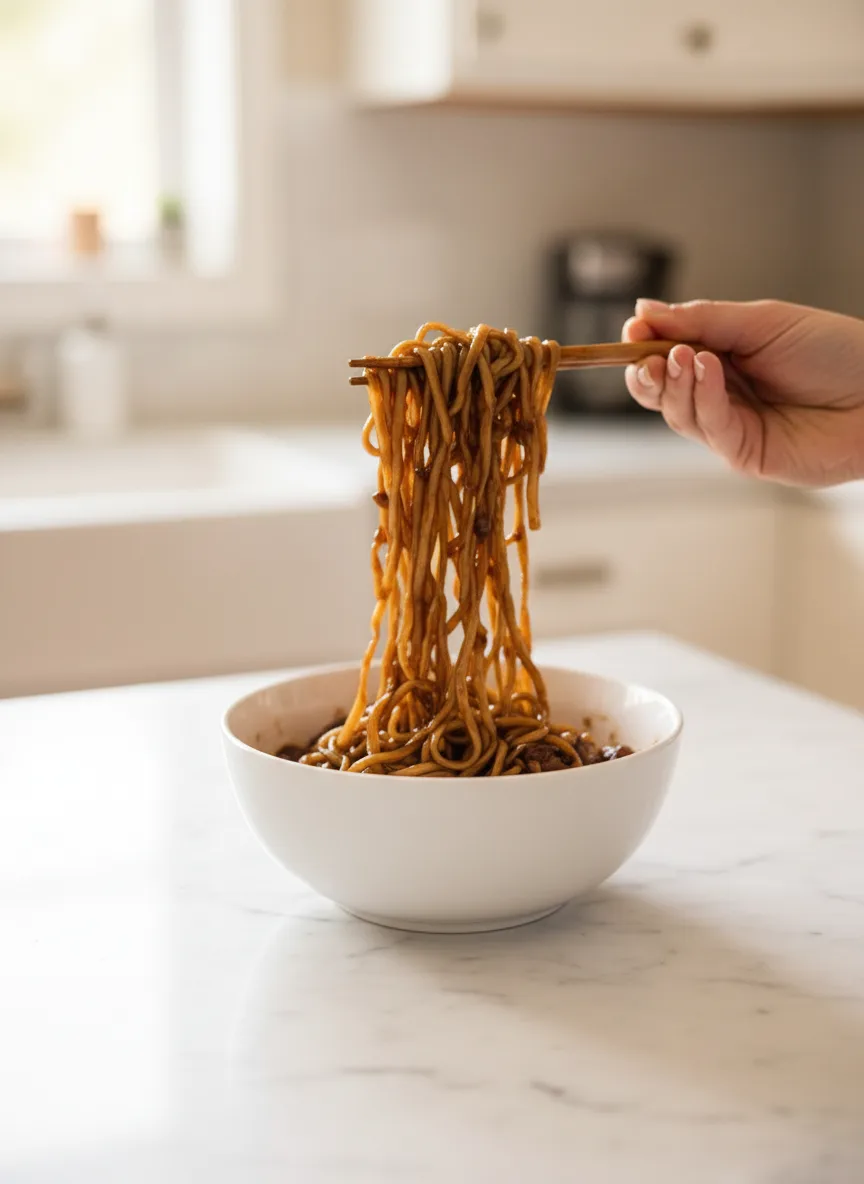
Flavor Variations
While traditional black bean noodles shine in their classic form, try these tasty twists:
- Spicy version: Add gochujang or chili flakes
- Seafood style: Mix in diced tofu or chopped mushrooms
- Extra veggies: Incorporate bell peppers or carrots
- Nutty crunch: Top with toasted sesame seeds
Serving Suggestions
Enhance your Jjajangmyeon experience with complementary sides.
Kimchi provides the perfect crunchy, tangy contrast to rich sauce.
Quick-pickled radishes offer bright acidity, while raw onion slices
add sharp freshness. Consider fresh fruit after your meal, like
the lemon-blueberry combination in our lemon blueberry dessert \- its
bright citrus notes balance this savory dish beautifully. For
a complete Korean meal, serve alongside steamed dumplings or
scallion pancakes.
Storage and Freezing Instructions
Store leftover sauce separately from noodles in airtight containers. Refrigerated sauce keeps for 4 days – simply reheat with splash of water or broth. For freezing, portion cooled sauce into freezer bags. Lay flat and freeze up to 3 months. Thaw overnight in refrigerator before reheating. Cook fresh noodles when ready to serve for best texture.
Nutrition Facts per Serving
| Calories | Fat | Carbs | Protein | Fiber | Sugar | Sodium |
|---|---|---|---|---|---|---|
| 606 | 13 g | 103 g | 28 g | 7 g | 18 g | 1429 mg |
FAQs About Korean Black Bean Noodles
Can I make this gluten-free?
Absolutely! Use tamari instead of soy sauce and select rice noodles or zucchini spirals. Ensure your jjajang paste is certified gluten-free, as some brands contain wheat.
What if I can’t find jjajang paste?
While authentic flavor requires the fermented paste, in a pinch combine 2 tbsp miso with 1 tbsp black bean sauce and 1 tsp molasses. However, visit an Asian market for traditional paste when possible.
How do I prevent mushy noodles?
Always cook noodles al dente and rinse thoroughly in cold water after cooking. Keep sauce separate until serving. For meal prep, store components apart.
Final Thoughts
This Korean black bean noodle recipe delivers restaurant-worthy flavor with home kitchen simplicity. Bold, savory sauce clings perfectly to vegetables and noodles for ultimate comfort food satisfaction.
Whether following the traditional method or customizing with favorite veggies, this dish becomes an instant family favorite.
Perfect your sauce-thickening technique and enjoy experimenting with different plant proteins. For another globally inspired treat, try our bakery-style pistachio muffins their tender crumb and nutty flavor make a delightful dessert pairing.
Grab your wok and experience why this beloved Korean classic has stood the test of time!