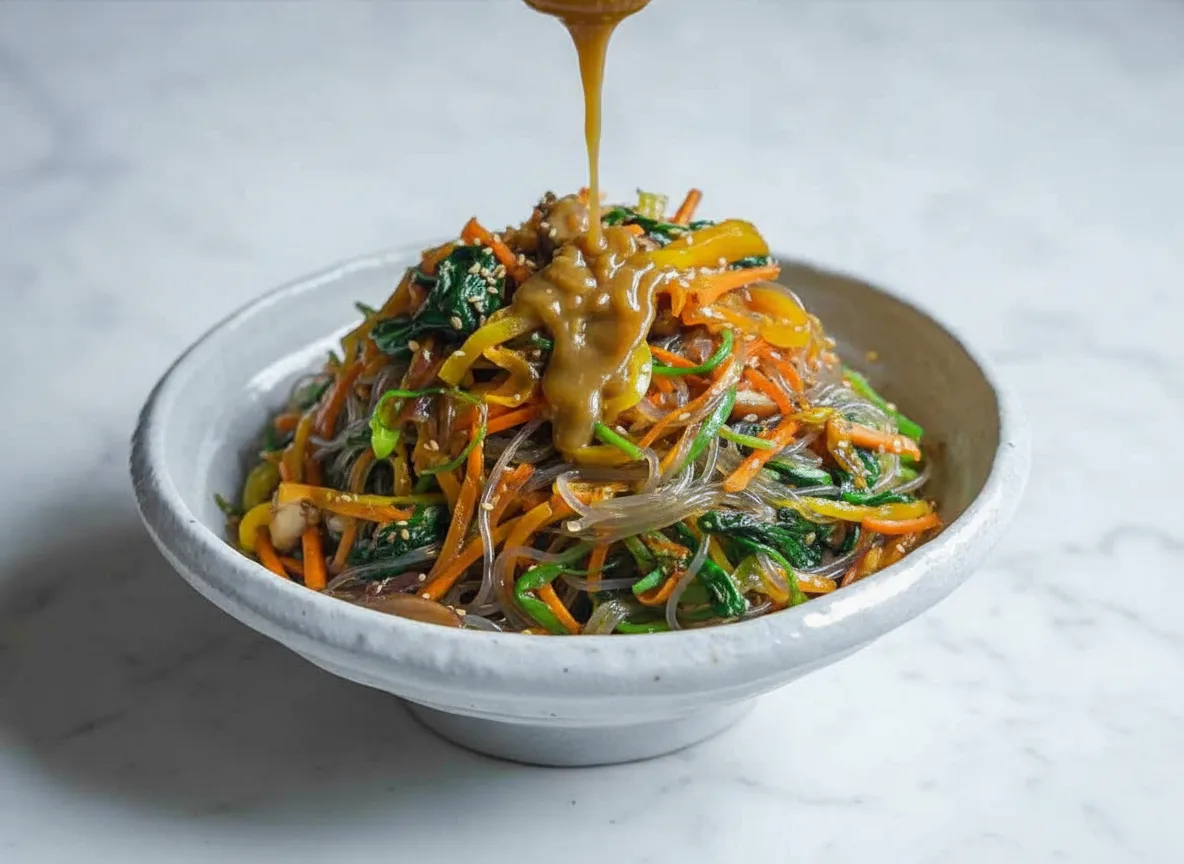
Bring the vibrant flavors of Korea to your dinner table with this colorful and satisfying japchae recipe. These stir-fried glass noodles shine with crisp vegetables and savory seasonings, creating a perfect balance of textures and tastes.
Whether you’re exploring Asian cuisine for the first time or looking for a reliable go-to dish, this vegetarian japchae delivers fresh flavors and beautiful presentation every time. Best of all, you can whip up this crowd-pleasing meal in under an hour using simple ingredients from your local grocery store.
Why You’ll Love This Japchae Recipe
This japchae recipe wins hearts for several excellent reasons. First, it offers incredible versatility – you can customize the vegetable mix based on what’s in season or your personal preferences.
Second, the chewy sweet potato noodles provide a delightful texture contrast to the crisp-tender veggies. Third, the dish comes together quickly once you’ve prepped your ingredients, making it ideal for busy weeknights.
Nutrient-Packed Ingredients
Every bite delivers nutritious goodness with spinach providing iron, bell peppers offering vitamin C, and mushrooms contributing beneficial antioxidants.
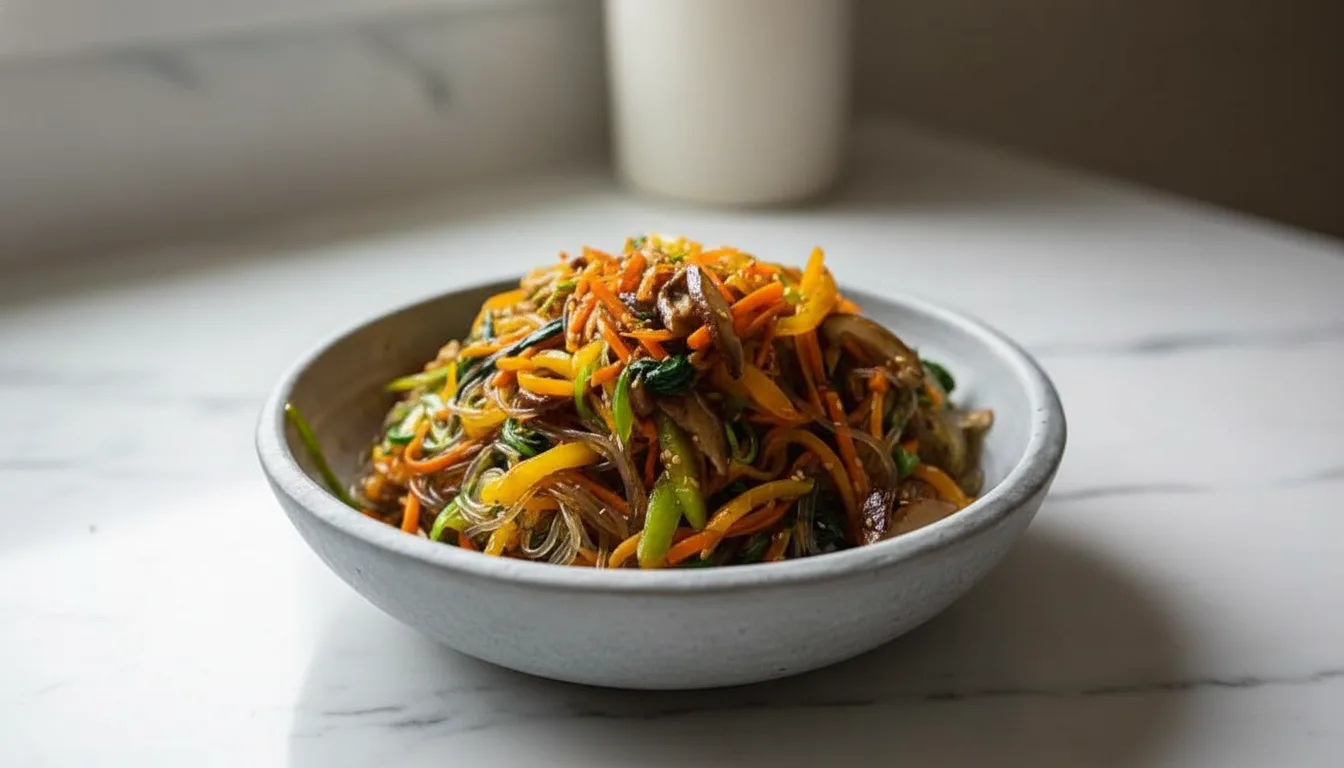
The colorful presentation makes it especially appealing for family meals or entertaining guests. Unlike heavy pasta dishes, japchae feels light yet satisfying – perfect for warmer months when you want something fresh but substantial. Consider serving it warm or at room temperature as part of your next gathering’s menu.
Recipe
Print
Authentic Korean Japchae Noodles – Veggie Asian Dinner
- Total Time: 45 minutes
- Yield: 4 servings 1x
Description
Colorful Korean glass noodles with crisp vegetables in savory-sweet sauce
Ingredients
- 6 cups uncooked spinach (180 g)
- 2 tbsp extra virgin olive oil (30 ml)
- 1 tbsp soy sauce (15 ml)
- 1 tbsp brown rice syrup (15 ml)
- 1/2 tsp black pepper (2.5 g)
- 1/2 cup sliced shiitake mushrooms (50 g)
- 1/2 cup julienned yellow onion (60 g)
- 2 tsp minced garlic (10 g)
- 1/2 cup julienned red bell pepper (75 g)
- 1/2 cup julienned green bell pepper (75 g)
- 1/2 cup julienned orange bell pepper (75 g)
- 1/2 cup julienned yellow bell pepper (75 g)
- 1/2 cup julienned carrot (60 g)
- 7 oz Korean sweet potato vermicelli (200 g)
- 1/4 cup soy sauce (60 ml)
- 2 tbsp brown sugar (30 g)
- 2 tbsp brown rice syrup (30 ml)
- 2 tbsp toasted sesame oil (30 ml)
- 2 tsp cracked black pepper (10 g)
- 1 tbsp toasted sesame seeds (9 g)
Instructions
- Cook spinach in boiling water for 1 minute until bright green. Drain, rinse under cold water, squeeze dry, and place in large bowl.
- Julienne mushrooms, onion, carrots, and bell peppers into thin matchsticks using knife or mandolin.
- Saute onion and mushrooms with olive oil until soft (3-5 minutes), add to spinach bowl.
- Saute carrots with olive oil until tender (4-5 minutes), add to vegetable bowl.
- Saute each bell pepper color separately with olive oil until slightly softened (about 3 minutes per batch), adding all to the bowl.
- Boil noodles following package instructions, reserving 1 cup cooking water before draining. Rinse noodles under cold water and add to vegetable bowl.
- Combine soy sauce, brown sugar, brown rice syrup, sesame oil, and black pepper in small bowl.
- Pour sauce and 1/4 cup reserved noodle water over noodle mixture. Toss vigorously with tongs, adding more noodle water gradually until desired consistency is reached.
- Garnish with sesame seeds and additional black pepper before serving.
Notes
- For gluten-free option, use tamari instead of regular soy sauce
- Store leftovers in airtight container for up to 4 days
- Add protein like tofu or tempeh for heartier meal
- Prep Time: 15 min
- Cook Time: 30 min
- Category: Main Course
- Method: Baked
- Cuisine: American
Ingredients and Substitutions
Let’s explore the key components that make this japchae special and possible substitutions if needed. While authentic versions use specific ingredients, several swaps can accommodate different dietary needs or pantry availability.
Base Components
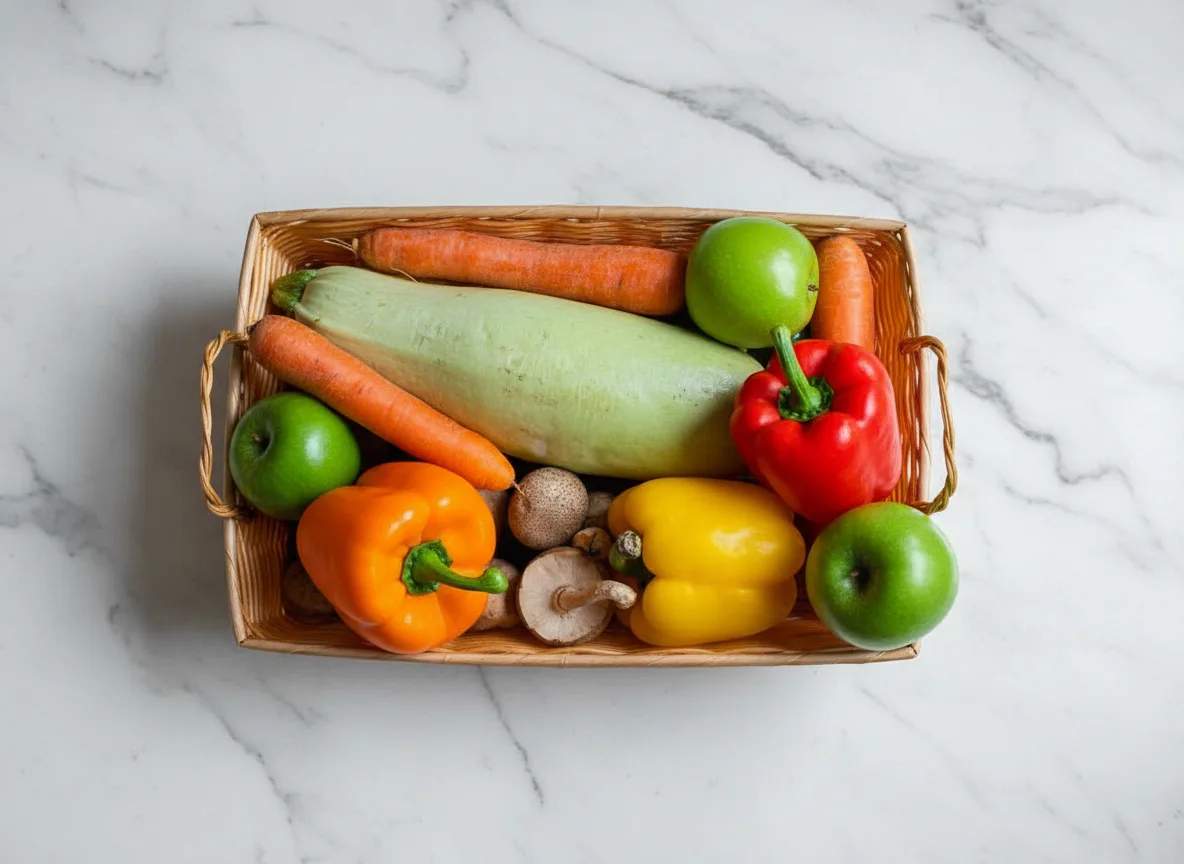
The foundation consists of Korean sweet potato noodles (dangmyeon), which create that signature chewy texture. If unavailable, you can substitute with mung bean glass noodles or even thin rice noodles. For vegetables, we use spinach, onions, mushrooms, carrots and assorted bell peppers. Feel free to add snap peas, cabbage or broccoli florets if you enjoy extra crunch.
Sauce and Seasonings
The savory-sweet sauce combines soy sauce, brown sugar, brown rice syrup and toasted sesame oil. For gluten-free options, use tamari instead of regular soy sauce. If you prefer less sweetness, reduce the brown rice syrup slightly. The toasted sesame seeds add nutty depth while black pepper lends gentle heat. Remember to explore our collection of food ideas Asian for more flavor inspiration.
How to Make Japchae Noodles
Follow these straightforward steps to create beautiful japchae that will impress your family. The process involves preparing ingredients separately before combining everything with the flavorful sauce.
Step 1: Prepare the Spinach
Bring a large pot of water to boiling and cook spinach for one minute until bright green. Drain immediately and rinse under cold water to stop cooking. Squeeze out excess moisture and place in a large mixing bowl.
Step 2: Julienne Vegetables
Cut onions, mushrooms, carrots and bell peppers into thin matchsticks using a sharp knife or mandolin. Keep colors separated for attractive presentation. Try to make pieces similar in size for even cooking.
Step 3: Cook Vegetables Separately
Heat olive oil in a skillet over medium-high. Sauté onion and mushroom until softened (3-5 minutes), then add to spinach. Repeat with carrots (4-5 minutes) and bell peppers (3 minutes each color), adding each cooked vegetable to the bowl.
Step 4: Prepare Noodles
Boil noodles following package instructions until chewy but tender. Reserve one cup cooking water before draining. Rinse noodles under cold water, drain well and add to vegetable mixture.
Step 5: Combine Everything
Add soy sauce, brown sugar, brown rice syrup, sesame oil and pepper to the bowl. Pour in reserved noodle water gradually while tossing vigorously with tongs until sauce thickens slightly and coats everything evenly.
Pro Tips for Success
Implement these professional techniques to elevate your japchae from good to extraordinary every time you make it.
Maintain Texture Balance
The magic of japchae lies in the contrast between chewy noodles and crisp vegetables. Undercook veggies slightly since they’ll soften further when mixed with warm noodles. Chill cooked noodles immediately after rinsing to preserve their springy texture.
Master the Sauce Consistency
Adjust sauce thickness using reserved noodle water meticulously. Start with 1/4 cup and add tablespoons until achieving your preferred consistency. The sauce should lightly coat ingredients without pooling at the bowl’s bottom. For richer flavor, let finished japchae rest 10 minutes before serving.
Flavor Variations
Customize your japchae with these creative twists that keep the dish exciting. The base recipe adapts beautifully to different flavor profiles and ingredient additions.
Protein Additions
While traditional japchae doesn’t include meat, you can add shredded chicken, scrambled eggs or crispy tofu for extra protein. For sweet alternatives, try adding tempeh strips marinated in teriyaki sauce. If you love bakery treats, pair your japchae with pistachio muffins for a delightful sweet-savory combination.
Spice Adjustments
Enhance heat by adding Korean chili flakes (gochugaru) to the sauce or topping with sliced fresh chilies. For aromatic warmth, stir in grated ginger with the garlic. Those preferring milder flavors can reduce black pepper and add extra sesame oil.
Serving Suggestions
Present your japchae beautifully with these plate presentation ideas and complementary side dishes that create memorable meals.
Meal Pairing Ideas
Serve japchae alongside other Korean favorites like kimchi pancakes or seaweed soup. For lighter meals, pair with miso-glazed eggplant or cucumber salad. When planning spring gatherings, consider including our favorite fresh spring meals to complete your menu.
Presentation Techniques
Garnish with extra sesame seeds and fresh scallion rings. Use tongs to create tall noodle nests on plates with vegetables arranged around them. Serve in lettuce cups for fun handheld appetizers at parties.
Storage and Freezing Instructions
Proper storage preserves japchae’s delightful textures. Let leftovers cool completely before transferring to airtight containers. Refrigerate for up to four days, though best consumed within two days for optimal noodle texture.
Reheating Methods
Revive refrigerated japchae by sautéing in a skillet with a teaspoon of water until heated through. Microwaving tends to make noodles too soft. If the dish seems dry, drizzle with a little extra sesame oil before reheating.
Freezing Considerations
While possible to freeze japchae, expect some texture changes upon thawing. Blanched vegetables may become softer and noodles slightly mushy. For best results, freeze sauce separately and prepare fresh noodles when ready to serve.
Nutrition Facts per Serving
| Calories | Fat | Carbs | Protein | Fiber | Sugar | Sodium |
|---|---|---|---|---|---|---|
FAQs About Japchae
Can I make japchae ahead of time?
Yes, japchae tastes wonderful made a day ahead. Store undressed components separately and combine with sauce before serving. This prevents noodles from absorbing too much moisture overnight.
What makes these noodles different from regular pasta?
Sweet potato starch noodles have unique chewiness and translucency. They contain no wheat, making them gluten-free when using tamari sauce. Their neutral flavor beautifully absorbs surrounding seasonings.
How do I prevent sticky noodles?
Rinsing cooked noodles thoroughly under cold water removes excess starch. Tossing with a teaspoon of sesame oil before adding sauce also helps prevent clumping.
Can I double this recipe for parties?
Absolutely! Japchae scales beautifully for crowds. Use your largest mixing bowl and work in batches when sautéing vegetables. Consider preparing our stunning lemon blueberry cheesecake for dessert to complete your Asian-inspired feast.
Final Thoughts
This vibrant japchae recipe brings restaurant-quality flavors to your home kitchen with manageable steps and accessible ingredients.
The balance of sweet, savory and nutty elements creates addictive flavors that keep everyone coming back for seconds.
Remember to have fun with vegetable combinations and sauce adjustments to make it your signature dish. Whether serving at potlucks or enjoying as weekday leftovers, these delightful noodles promise satisfaction in every colorful bite.