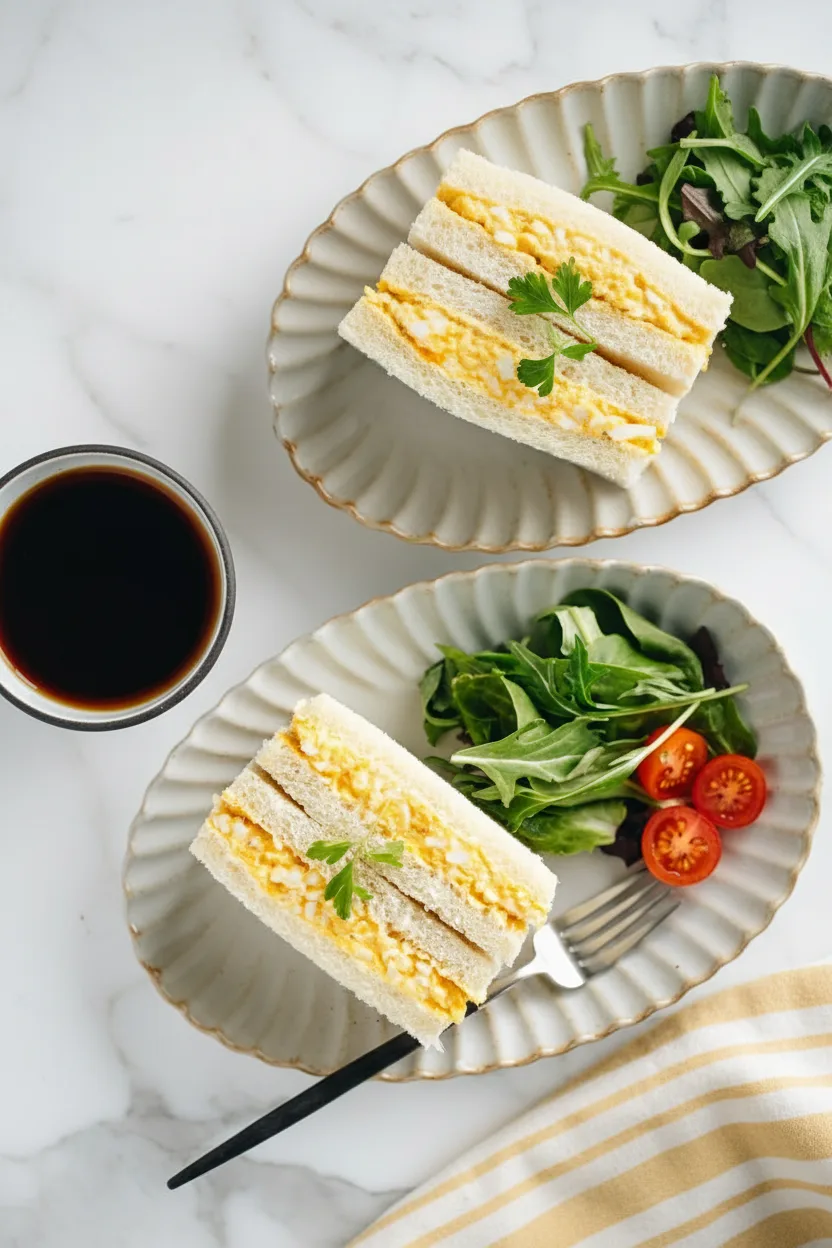
Nothing beats the simple joy of a perfectly crafted egg sandwich. This Japanese-style version brings creaminess to new heights while keeping preparation wonderfully straightforward.
Whether you’re packing lunchboxes or enjoying a quick meal at home, this recipe delivers satisfaction in every bite. Let’s explore how to create this iconic Tokyo convenience store favorite in your own kitchen.

Why You’ll Love This Egg Sandwich
Japanese tamago sando stands out for its impossibly fluffy texture and balanced flavors. Unlike traditional egg salads, this version achieves a luxuriously smooth consistency that spreads like a dream. Best of all, you need fewer than ten ingredients to recreate this popular sandwich at home.
Comfort Food Upgrade
The combination of soft Japanese milk bread and creamy egg filling offers pure comfort. For more lunchtime inspiration perfect for busy families, explore our collection of hassle-free options that everyone will enjoy.
Five-Minute Assembly
After prepping the filling, building these sandwiches takes barely any time. They make ideal candidates for pre-made meals throughout the week.
Recipe
Print
Creamy Japanese Egg Sandwich (Tamago Sando) Recipe
- Total Time: 30 min
- Yield: 2 servings 1x
Description
Creamy Japanese egg salad sandwich with fluffy milk bread
Ingredients
- 3 large eggs (50 g each)
- 1/4 tsp sugar
- 1/4 tsp kosher salt
- 1/8 tsp freshly ground black pepper
- 2 tsp milk
- 2 Tbsp Japanese mayonnaise
- 4 slices Japanese milk bread
- Salted butter (for spreading)
Instructions
- Gather all the ingredients.
- Place eggs in saucepan and cover with cold water.
- Bring to boil then reduce to simmer for 8 minutes.
- Transfer eggs to ice bath to cool completely.
- Peel eggs and separate yolks from whites.
- Mash yolks with sugar, salt, and pepper until smooth.
- Finely chop egg whites and combine with yolk mixture.
- Stir in milk and mayonnaise until creamy.
- Lightly butter all bread slices.
- Spread egg mixture thickly on one slice.
- Top with second slice of bread.
- Remove crusts and cut diagonally before serving.
Notes
- Use day-old eggs for easier peeling.
- Adjust mayonnaise quantity for preferred consistency.
- Serve immediately or wrap tightly for later.
- Prep Time: 10 min
- Cook Time: 15 min
- Category: Main Course
- Method: Baked
- Cuisine: American
Nutrition
- Calories: 340 kcal
- Sugar: 4 g
- Sodium: 583 mg
- Fat: 19 g
- Carbohydrates: 26 g
- Fiber: 1 g
- Protein: 14 g
Ingredients and Substitutions
Quality ingredients make all the difference in this minimalist recipe. While authentic components yield the best results, we’ll explore smart alternatives too.
Base Components
- 3 large eggs (50 g each without shell)
- 2 tsp milk
- 4 slices Japanese milk bread (shokupan)
- Salted butter (for spreading)
Sauce and Seasonings
- 2 Tbsp Japanese mayo
- ¼ tsp sugar
- ¼ tsp kosher salt
- ⅛ tsp freshly ground black pepper
Smart Swaps
If Japanese milk bread proves hard to find, Texas toast works nicely. For those watching sugar intake, honey works as an alternative sweetener. If your stores don’t carry Japanese mayo, substitute with regular mayo mixed with a teaspoon of rice vinegar.
How to Make Japanese Egg Sandwich
The magic happens in two phases: creating the creamy filling and assembling for maximum enjoyment.
Step 1: Cook the Eggs
Place eggs in a saucepan and cover with cold water. Bring to boil then immediately reduce to simmer. Cook for eight minutes before transferring to ice water. This creates perfectly cooked yolks – firm but still vibrant yellow.
Step 2: Prepare the Filling
Peel cooled eggs and separate yolks from whites. Mash yolks with sugar, salt, and pepper until smooth. Finely chop whites then combine with yolks. Stir in milk and mayo until the mixture reaches a spreadable consistency.
Step 3: Build Your Masterpiece
Lightly butter all bread slices – this creates a moisture barrier. Spread filling generously on one slice before topping with another. Remove crusts for authenticity then cut diagonally into triangles. For perfect texture balance, consider tips from our bakery-style muffin guide on achieving ideal softness.
Pro Tips for Success
These professional techniques elevate your sandwiches from good to extraordinary.
Egg Cooking Technique
Older eggs peel easier than fresh ones. Adding baking soda to boiling water helps with peeling too. The ice bath stops cooking immediately, preventing unsightly gray yolk rings.
Spread Consistency
Adjust mayo quantity to achieve your preferred texture – some prefer thicker spreads while others enjoy creamier versions.
Bread Selection
Shokupan’s airy texture absorbs fillings without becoming soggy. If unavailable, choose soft white bread with fine crumb structure.
Flavor Variations
While the classic version shines on its own, these tasty twists add exciting dimensions.
Vegetable Add-Ins
- Finely diced cucumber (patted dry)
- Microgreens for fresh crunch
- Shredded lettuce mixed into filling
Protein Boosts
- Flaked cooked salmon
- Chopped cooked chicken
- Diced smoked ham
Global Flavors
Add curry powder for Indian flair or wasabi paste for extra kick. Lemon zest brightens the mix beautifully – a technique showcased in our citrus dessert collection.
Serving Suggestions
Pair these sandwiches with complementary dishes for complete meals.
Breakfast Combo
Serve with miso soup and fresh fruit for balanced morning nutrition.
Lunch Pairings
Accompany with seaweed salad and matcha latte for authentic Japanese café vibes.
Afternoon Tea
Cut into delicate fingers and serve alongside other tea sandwiches. These make excellent partners to fruity treats like our lemon blueberry dessert ideas.
Storage and Freezing Instructions
Proper storage maintains freshness and food safety.
Refrigeration
Store assembled sandwiches in airtight containers for up to 24 hours. The bread may soften slightly but remains delicious.
Freezing Tips
Freeze unassembled filling in sealed bags for up to two months. Thaw overnight in refrigerator before use.
Make-Ahead Strategy
Prepare filling three days ahead. Store separately from bread until assembly time.
Nutrition Facts per Serving
| Calories | Fat | Carbs | Protein | Fiber | Sugar | Sodium |
|---|---|---|---|---|---|---|
| 340 kcal | 19 g | 26 g | 14 g | 1 g | 4 g | 583 mg |
FAQs About Japanese Egg Sandwiches
Can I make this gluten-free?
Absolutely! Use your favorite gluten-free bread and verify mayo certifications.
Why does Japanese mayo taste different?
It contains rice vinegar and MSG, creating umami richness. Some brands use egg yolks only for extra creaminess.
How do I prevent soggy bread?
Buttering creates a protective layer. Spread filling evenly without over-saturating bread edges.
Can I use sandwich bread instead?
Standard bread works, but thick-sliced soft white varieties produce better results.
Final Thoughts
This Japanese egg sandwich exemplifies how simplicity creates extraordinary meals. With its velvety texture and balanced flavors, it transforms humble ingredients into something magical.
Whether you’re new to Japanese cooking or a seasoned enthusiast, this recipe deserves a spot in your repertoire. The techniques learned here open doors to countless sandwich variations while mastering fundamental kitchen skills. Happy cooking!