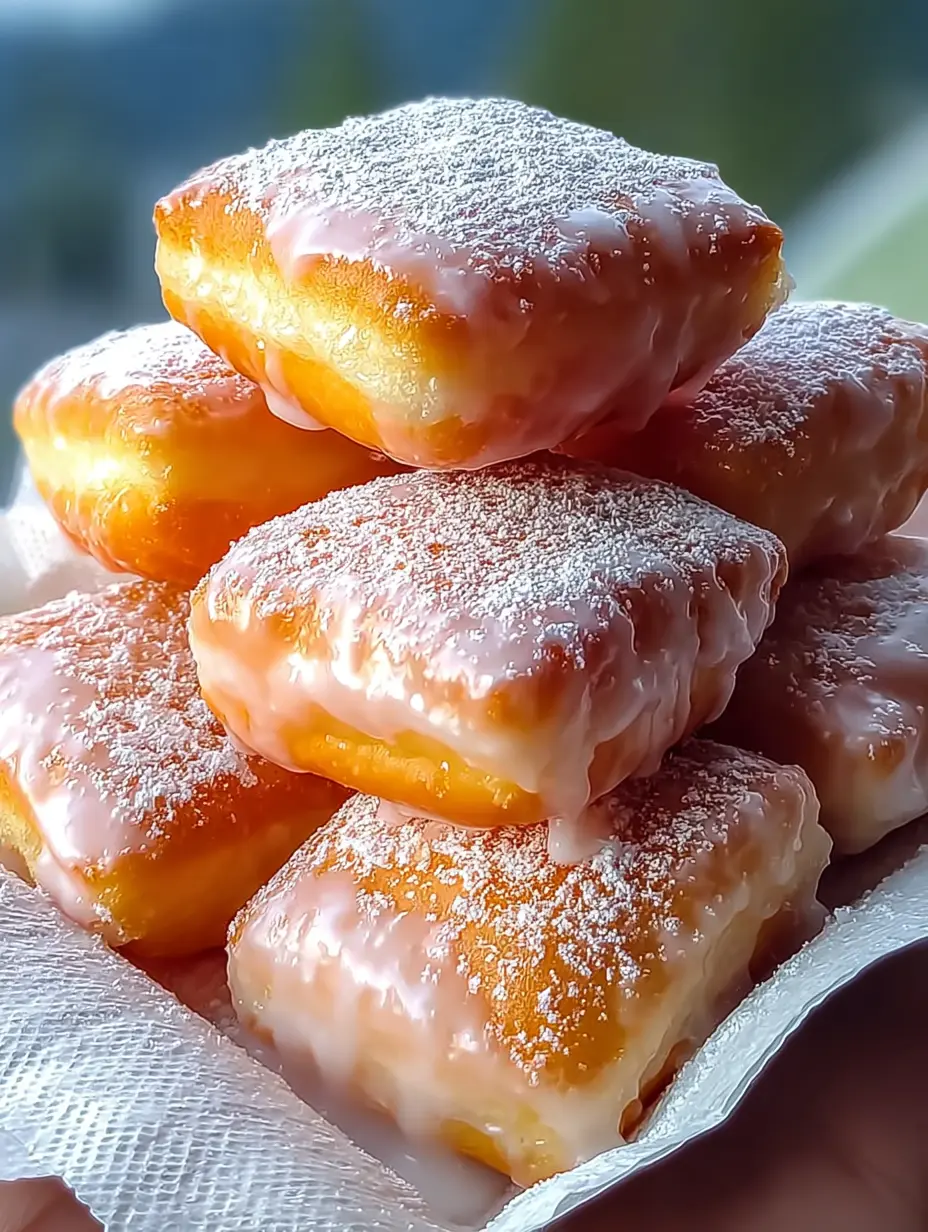
Mastering the art of the beignet requires a perfect balance of science and patience. This Glazed Buttermilk Beignet Square recipe transforms simple pantry staples into a world-class dessert. Unlike traditional fried dough, the inclusion of buttermilk adds a subtle tang and an incredibly tender crumb.
Whether you are searching for what to make with buttermilk or looking for new delicious dessert recipes, these glazed pastries deliver bakery-quality results in your home kitchen.
Why Buttermilk Makes the Best Beignets
Experienced bakers often reach for buttermilk because of its acidity. In this recipe, the buttermilk reacts with the yeast and flour to create a softer, more elastic dough. This chemical interaction ensures your beignet squares puff up beautifully in the hot oil.
While many buttermilk recipes focus on biscuits or pancakes, using it in a yeasted fried dough provides a unique flavor profile that cuts through the sweetness of the sugar glaze.
The Role of Yeast and Temperature
Success starts with yeast activation. You must ensure your buttermilk reaches a warm temperature but never exceeds 110 degrees Fahrenheit. Hot liquids kill the yeast cells, while cold liquids prevent them from waking up. When the mixture becomes foamy after five minutes, you know the yeast is healthy and ready to lift your dough to impressive heights.
The Secret to the Perfect Dough Texture
Forming the dough involves more than just mixing ingredients. You are building structural integrity. By gradually adding the all-purpose flour, you control the hydration. The goal is a dough that feels tender but does not stick to your fingers like glue.
This balance allows the beignet to expand without cracking during the frying process. If the dough feels too tough, the center will remain dense; if it is too wet, it will absorb excess oil and become heavy.
The Importance of the First Rise
Never rush the rising process. Letting the dough double in size is essential for carbon dioxide development. This air trapped inside the dough expands rapidly once it hits the hot oil, creating that classic hollow-yet-pillowy interior that defines the best glazed buttermilk pastries.
Place your bowl in a draft-free spot, such as an oven with the light turned on, to maximize the rise.
Frying Techniques for Golden Perfection
Temperature control differentiates a professional beignet from an oily mess. Aim for a constant 340 to 350 degrees Fahrenheit. If the oil is too cold, the dough drinks the fat. If it is too hot, the exterior burns before the inside cooks through.
Use a neutral oil with a high smoke point like vegetable or canola oil to ensure the flavor of the butter and buttermilk remains the star of the show.
Effective Draining and Cooling
Transitioning the beignets from the oil to a wire rack is a critical step. While a paper towel might seem intuitive, it can trap steam under the beignet, leading to a soggy bottom.
A wire rack allows air to circulate around the entire square, keeping the crust crisp. This crisp foundation is necessary to support the weight of the vanilla glaze.
Crafting a Silky Smooth Glaze
A beignet is only as good as its coating. While many New Orleans style treats use powdered sugar, these beignet squares feature a thick, shiny glaze. By whisking powdered sugar with heavy cream and real vanilla extract, you create a shell that hardens slightly as it cools.
This provides a satisfying crackle when you bite into the soft pastry. For the best visual appeal, glaze the beignets while they are still warm so the coating bonds tightly to the surface.
Exploring Things to Make With Buttermilk
If you have leftover buttermilk after this recipe, the possibilities are endless. From buttermilk biscuits to savory marinades, this ingredient is a kitchen powerhouse. However, few things to make with buttermilk compare to the sheer indulgence of a freshly fried beignet.
These squares represent the peak of buttermilk recipes, blending the comfort of home cooking with the elegance of a French pastry shop.
Nutrition Information
| Nutrient | Amount Per Serving |
|---|---|
| Calories | 290 kcal |
| Total Fat | 12g |
| Saturated Fat | 6g |
| Cholesterol | 25mg |
| Sodium | 180mg |
| Total Carbohydrates | 42g |
| Dietary Fiber | 1g |
| Total Sugars | 22g |
| Protein | 4g |
Final Tips for Success
When cutting your squares, use a sharp pizza cutter or a bench scraper to avoid tearing the dough. Neat edges ensure even expansion in the fryer. Furthermore, keep your batches small. Adding too many cold dough squares at once will drop the oil temperature significantly.
With a little practice, these glazed buttermilk beignet squares will become a requested favorite in your household dessert rotation.
The Recipe
Print
Glazed Buttermilk Beignet Square
- Total Time: PT-494051H34M21S
- Yield: 12 1x
- Diet: Vegetarian
Description
Indulge in these pillowy, bakery-style beignet squares featuring the richness of buttermilk and a silky vanilla glaze.
Ingredients
3/4 cup warm buttermilk
2–1/4 teaspoons active dry yeast
1/4 cup granulated sugar
1 large egg
1/4 cup unsalted butter, melted
3–1/4 cups all-purpose flour
3/4 teaspoon salt
Neutral oil for frying
2 cups powdered sugar
3–4 tablespoons milk or cream
1 teaspoon vanilla extract
Pinch of salt
Instructions
- Whisk warm buttermilk, yeast, and sugar in a large bowl. Let sit for 5-8 minutes until foamy.
- Mix in the egg and melted butter. Slowly stir in flour and salt until a soft dough forms.
- Knead for 8-10 minutes until smooth. Cover and let rise in a warm spot for 1 to 1.5 hours until doubled.
- Roll dough to 1/2-inch thickness and cut into 2-inch squares.
- Heat oil to 345°F. Fry squares in batches for 2-3 minutes per side until golden.
- Drain on a wire rack for 2 minutes.
- Whisk powdered sugar, milk, vanilla, and a pinch of salt. Dip warm beignet tops into the glaze.
- Let the glaze set for 10 minutes before serving.
Notes
- Maintain oil temperature between 340-350°F for best results.
- Do not use paper towels for draining to maintain glaze texture.
- Prep Time: 25 min
- Cook Time: 15 min
- Category: Dessert
- Method: Frying
- Cuisine: American
Nutrition
- Serving Size: 1 square
- Calories: 290 kcal
- Sugar: 22g
- Sodium: 180mg
- Fat: 12g
- Saturated Fat: 6g
- Unsaturated Fat: 4g
- Trans Fat: 0g
- Carbohydrates: 42g
- Fiber: 1g
- Protein: 4g
- Cholesterol: 25mg